
Guide / GUITAR LAB
Stainless steel fret leveling on bass: when setup is not enough
Your bass buzzes, but a fret rocker finds no uneven frets? Using an Ibanez BTB605MS, we explain when stainless steel frets need leveling and what to check before setup.
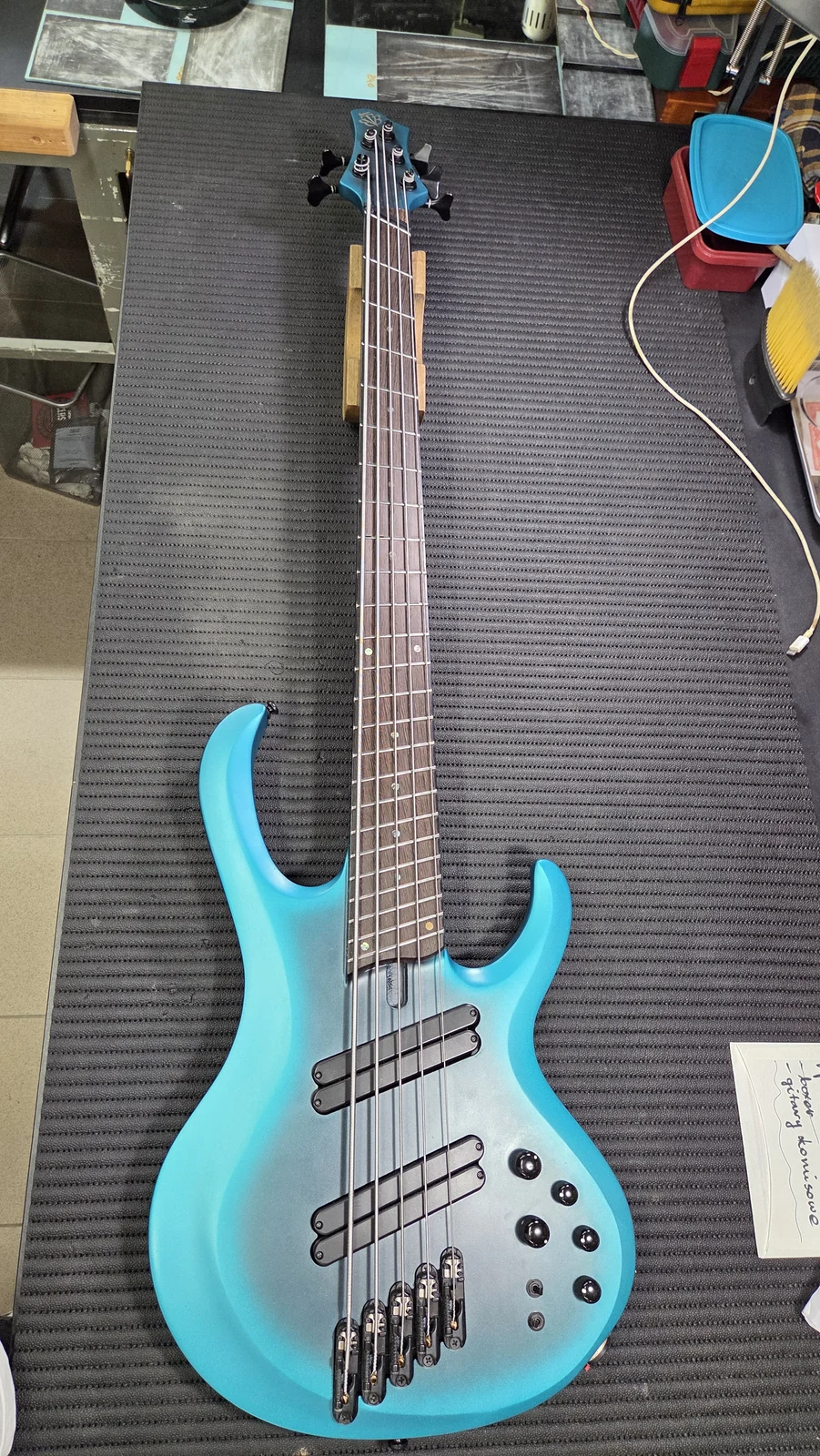
Stainless steel frets can need leveling too
Fret wear resistance and correct geometry are two different things. A bass with stainless steel frets can buzz even when the frets are seated securely in the fingerboard and there are no obvious steps between them. In that situation, the playing surface needs to be checked over a longer section of the neck before another setup adjustment.
We encountered this problem at Guitar Lab in a five-string Ibanez BTB605MS. Below, we describe how we found the cause of the buzzing and why stainless steel fret leveling proved necessary on this particular instrument.
Ibanez BTB605MS: multiscale, a .160 string and very low action
The customer reported string buzz along the entire neck. He uses the bass for heavier styles of metal and wants a very low setup: approximately 1.4 mm at the 12th fret with a .160-inch thickest string. This describes one instrument and the player’s preferences, rather than a universal standard for bass guitars.
The BTB605MS has a 35–37-inch multiscale design and stainless steel frets. In a multiscale instrument, the vibrating lengths of the strings differ, as reflected in the fanned fret layout.
Ibanez — BTB605MS specifications ↗
Why did the fret rocker not reveal the problem?
We checked adjacent frets with a fret rocker. The check showed no local unevenness; the frets were seated securely and were not lifting out of the fingerboard. Yet the buzzing remained.
A fret rocker compares the heights of three adjacent frets. It helps identify local differences, but this short measurement does not replace an assessment of the profile over a longer section of the neck.
A long straightedge revealed two dips and a hump
The cause only became apparent when a longer checking straightedge — informally called a “laga” in our workshop — was used alongside a check of how the neck responded to truss rod adjustment. We found two distinct dips around frets 3–9 and 14–20, with a small hump near the 12th fret between them.
This fret surface profile explains why a satisfactory short-span measurement does not end the diagnosis. On this bass, further setup work without leveling the frets did not address the identified problem. The instrument was not beyond repair; fret work was needed before the final setup.
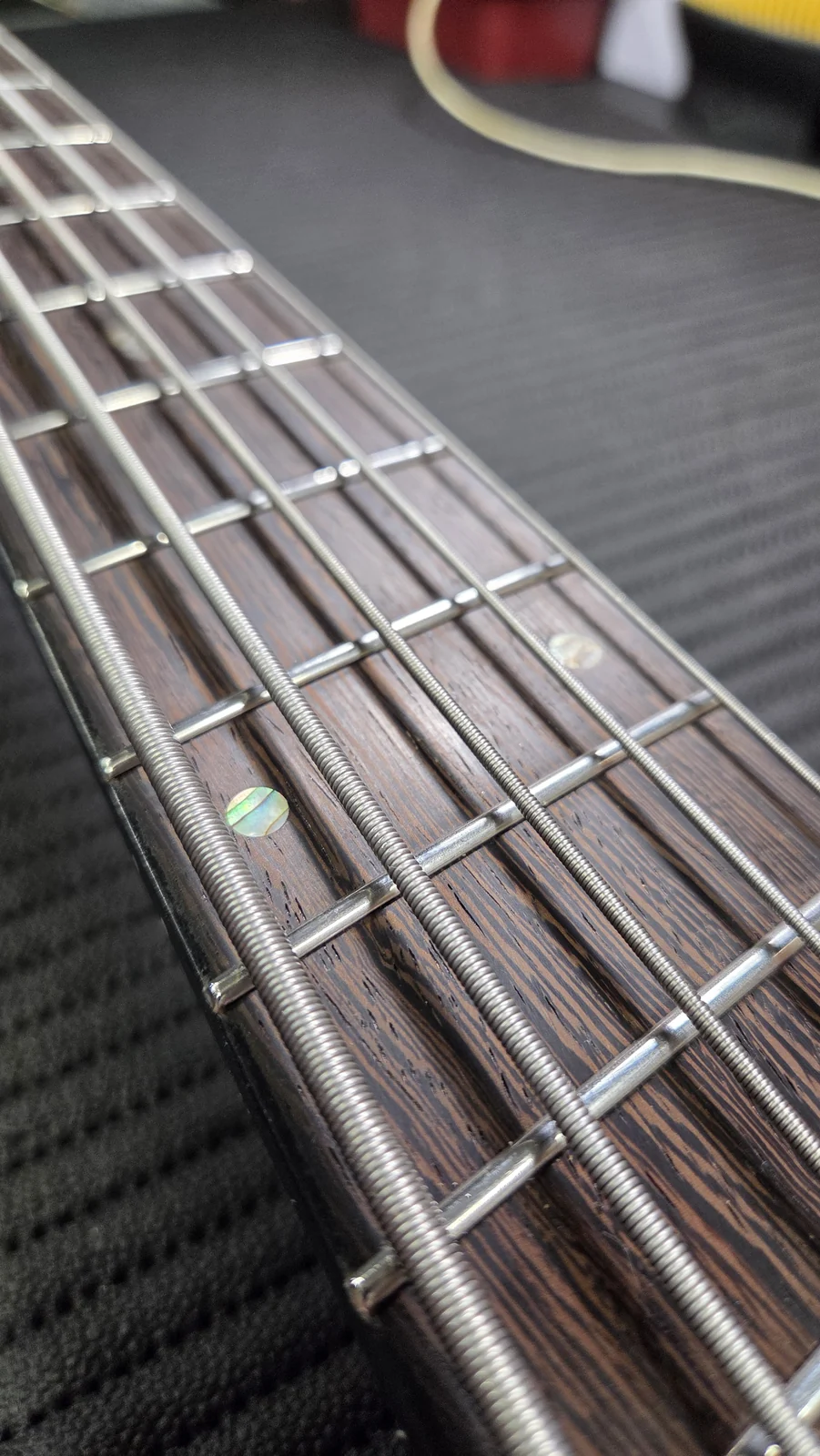
What does stainless steel fret leveling involve?
Leveling evens out the heights of the existing fret crowns. It is different from replacing the frets or sanding the wooden fingerboard. On this BTB605MS, we carried out stainless steel fret leveling and a setup; the repair record also notes securing the frets with glue. That entry does not change the earlier inspection result: no protruding or loose frets were found.
After leveling, fret work involves restoring the appropriate crown shape, smoothing tool marks and checking the instrument after adjustment. Surface smoothness and preserving the established height matter just as much as the leveling itself.
Stainless steel is harder than the nickel silver alloys commonly used for frets. Suitable tools and abrasives are chosen for the work; diamond fret crowning files are one example.
StewMac — fret leveling and crowning (PDF) ↗
The repair result and the limits of a very low setup
Fret leveling and the final setup resolved the reported problem. This is the outcome for this particular instrument, not a promise that every buzzing guitar needs fret leveling.
Achievable action also depends on the strings, tuning and playing style. With a very low setup, checking the instrument with the intended strings and the player’s articulation is especially important. A measurement in millimeters alone does not describe the entire setup.
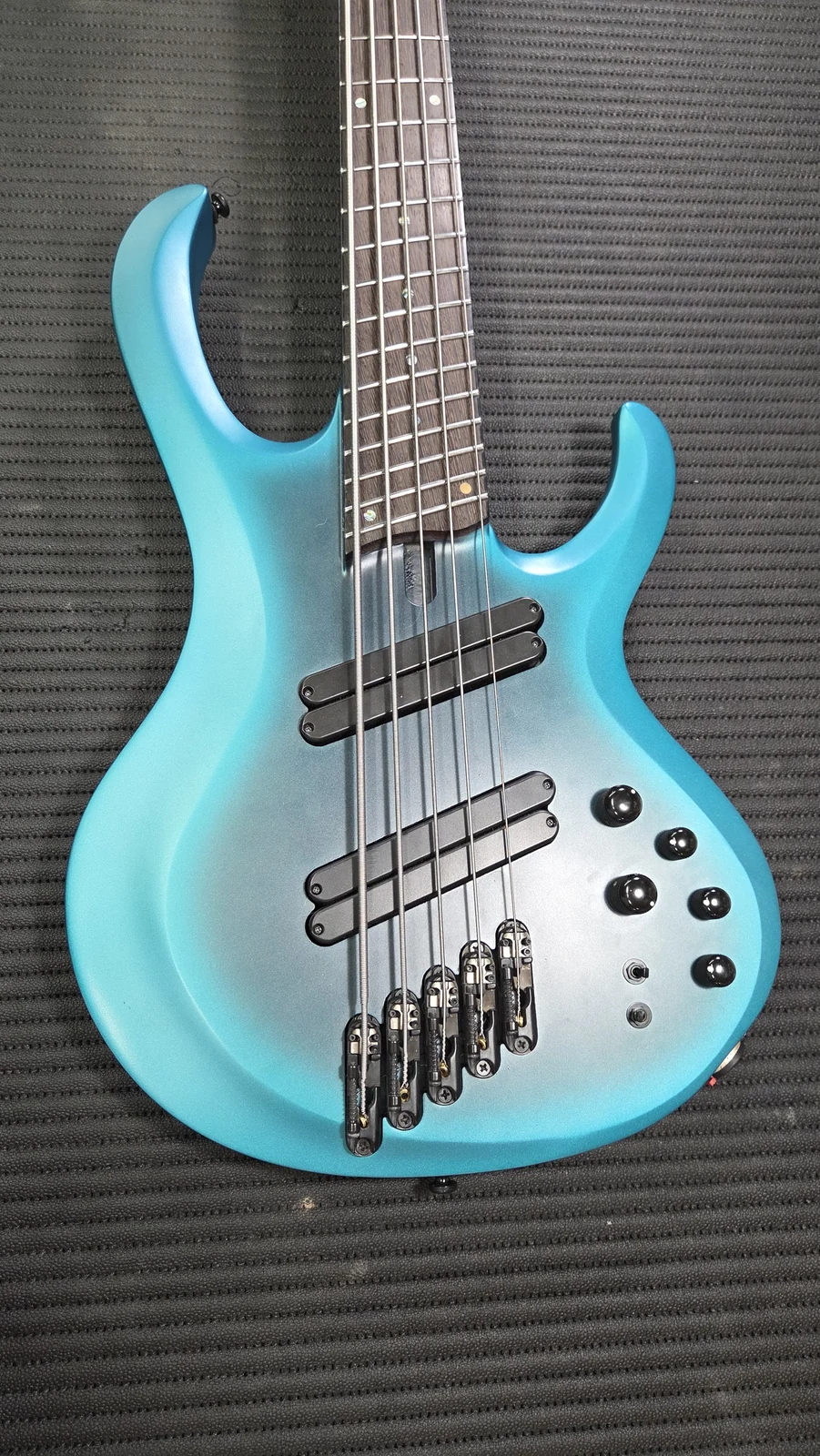
When should a bass have its frets checked?
If buzzing occurs in many positions, persists despite adjustment or forces the strings to be raised beyond a comfortable height, it is worth checking both fret seating and relative fret height over short and long spans. The decision to level the frets should follow measurements.
Before your visit, specify the tuning, string gauges and positions where the problem occurs. Describe your playing style and preferred action as well. This helps establish whether the instrument needs a setup, stainless steel fret leveling or another repair.
Other basses in our selection
If you are also comparing instruments, explore the basses below from the Selected Vintage Guitars catalogue. They share the instrument category; their construction and intended use differ from the five-string multiscale Ibanez. We do not claim that they have stainless steel frets or identical setup capabilities. Check each listing for its current condition and completed service work.
 Tokai Hard Puncher PB45 - Black, Lawsuit era, 1981Photos, service record and current offer details →
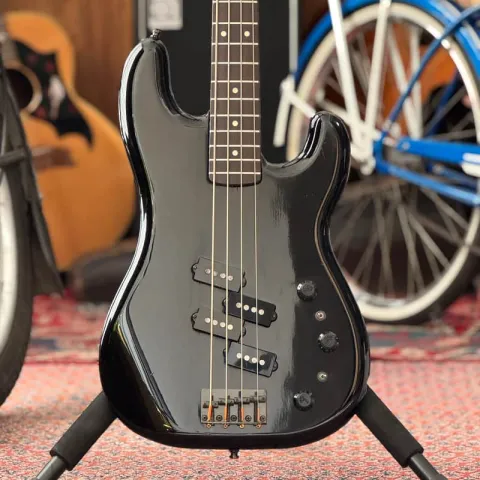 Fender Boxer PB-555 – Black, Golden Era, 1987Photos, service record and current offer details →
Sources and documentation
We describe a repair carried out at Guitar Lab. The photographs and work performed are documented in the repair record. The Ibanez and StewMac resources cited in the article provide additional information about the model, measurements and fret work.