
Guide / GUITAR LAB
Neck won't adjust? The truss-rod nut and frets on a Gherson bass
An adjustment problem does not always mean replacing the entire truss rod. Here is what needs checking before work on the fingerboard and frets.
Check the adjustment mechanism first
When a neck won't adjust properly, we start by establishing what kind of truss-rod design we are dealing with and what condition the part the wrench engages is in. A damaged nut and a damaged rod are different faults. Telling them apart matters for the scope of the repair.
In some designs the nut alone can be replaced. However, you should not assume that every mechanism allows it to be unscrewed in the same way. Resistance during adjustment is a reason to look for the cause, not to reach for a longer lever.
What to tell the workshop
Specific information helps: whether the wrench slips in the socket, whether the nut resists turning, and whether earlier attempts at adjustment changed the curvature of the neck. It is worth describing recent changes of string set and tuning. Simply saying “the neck is crooked” does not explain what is happening with the mechanism.
A description like this lets us prepare for an inspection, but it cannot settle remotely whether the rod needs replacing. The extent of disassembly should follow from the fault that has been diagnosed.
How neck relief is checked
Relief is the slight curvature of the neck, assessed along the strings. A string can be used as a reference line for the measurement: fret it at the first fret and at a higher fret specified for the instrument in question, then use a feeler gauge to check the gap above the fret crown around the middle of the span being checked. We measure the distance from the string to the metal, not to the wood.
The result should be interpreted against the construction of, and recommendations for, the specific instrument. Measuring relief is different from measuring string action, so one value should not be substituted for the other. Only by putting this information together can you judge whether the problem lies in the adjustment, the frets or the string-height setting.
Adjustment, fingerboard work and fret levelling
Fingerboard curvature and unevenness in the fret surfaces are assessed separately. The truss rod, correcting the wood and levelling the fret crowns are not three ways of doing the same job. Before a decision is made to level or replace the frets, you need to know which area requires attention.
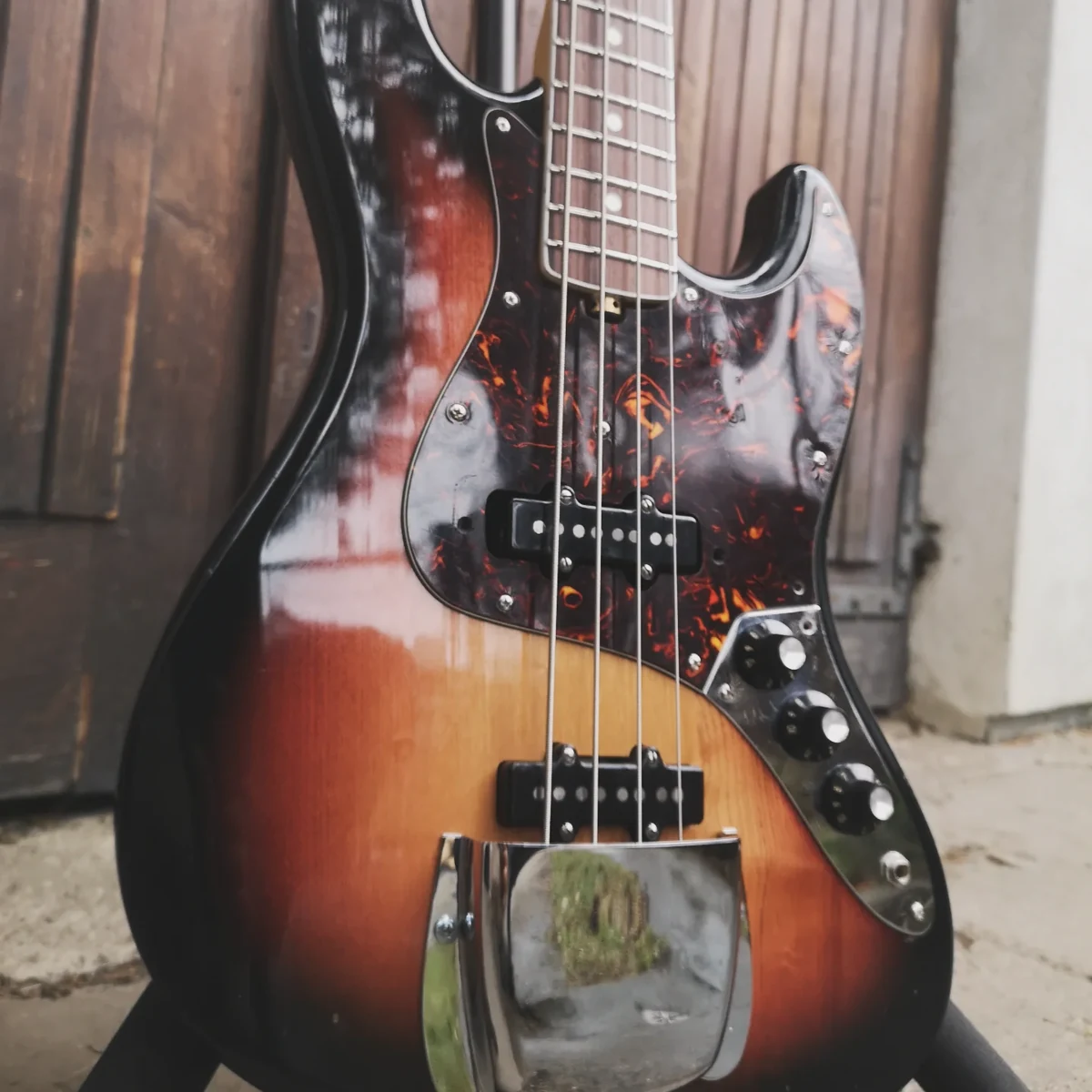
Gherson Jazz Bass: repair before new frets
On this bass we first dealt with the truss-rod nut. We then corrected the fingerboard and installed new frets. It is an example of a repair in which the fret work was part of a broader preparation of the neck.
What matters most for the player is the order of decisions: first diagnose the adjustment problem, then establish the scope of work on the playing surface. A refret should not be the answer to every difficulty in setting up an instrument.
How to discuss the setup you expect
Before the service, specify the tuning and string set you intend to use, and describe your playing technique. Rather than ordering a specific repair based on a guess, describe the symptoms and the result you expect. This makes it possible to focus on the needs of the bass and the player, without adding unnecessary work to the estimate.
Further reading
You can read more about the adjustment mechanism and fret work in StewMac's resources. The write-up of the replaceable-nut repair shows one possible case, not a solution for every truss-rod design. Fender's guide, in turn, shows how to measure relief.
Truss-rod nut repair — StewMac ↗