
Guide / GUITAR LAB
Refretting: why fingerboard preparation matters. Ibanez Musician
New frets need a stable seat. We discuss the role of the fret slots and the scope of a restoration that preserves the character of an older instrument.
See more photos of this project ↗
A new fret starts with a good seat
A refret doesn't end with choosing the fret wire. The condition of the fingerboard and of the slots the frets will sit in matters too. That's why, before installation, the slots have to be checked for cleanliness and depth, and for how well they match the prepared frets.
Debris left in a slot or insufficient slot depth can prevent a fret from seating fully. Any wood repair is a separate stage; it shouldn't be skipped just because the problem is barely visible from the outside.
Seating before levelling
If a fret moves or lifts away from the fingerboard, its stability has to be dealt with first. Dressing the crown does not remove the cause of improper seating. Only a properly prepared playing surface provides a basis for further finishing work.
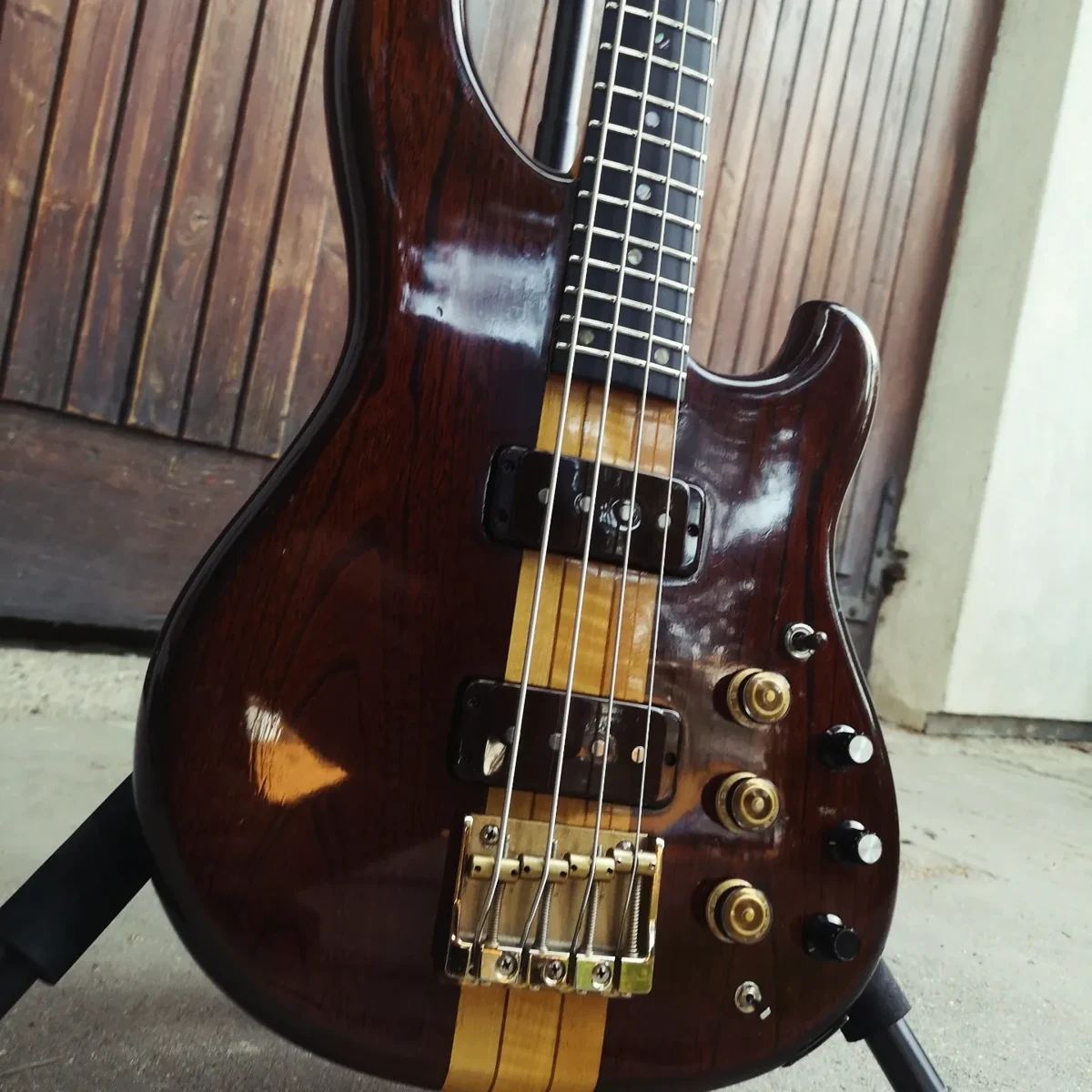
A 1981 Ibanez Musician in our workshop
The work on this Musician included fingerboard correction, fret-slot repair and the installation of new frets. We also attended to the finish on the neck sides and headstock. The job was rounded off with nut adjustment, maintenance and a setup.
We worked on the body while preserving its patina. This is an important part of the restoration scope: improving an instrument's playability and condition doesn't have to mean removing every sign of age. With an older instrument, it's worth establishing in advance which aspects of its appearance the owner wants to keep.
Restoration versus a complete cosmetic makeover
The word "restoration" can mean completely different results to two different people. One expects every scratch to be removed; the other wants to keep the look of a well-used instrument. Before work begins, it's therefore worth agreeing separately on the fingerboard and frets, the condition of the hardware, and the extent of any intervention in the finish.
The Musician shows that repairing the playing surface and preserving the patina can be part of a single project. You don't have to choose between a fully functional instrument and its existing visual character.
Nut adjustment, not automatically a new nut
The work on the Musician included nut adjustment. This matters because new frets and a corrected fingerboard can change the relationship between the nut slots and the first fret. The nut therefore needs to be assessed alongside the fretwork.
Whether an adjustment is enough or a new nut is needed depends on that individual part. A refret does not automatically include a replacement nut.
Where the finish work was focused
Finish work on this guitar concentrated on the neck sides and headstock, while the body kept its patina. In general, the fingerboard edges are where fret ends meet the neck, and the neck is what the playing hand constantly touches, so it is a logical area to consider alongside fret work.
Treating neck and body as separate decisions lets an owner choose a different level of intervention for each.
What to ask about when getting a refret quote
Ask for the refret itself, any fingerboard correction and any slot repairs to be listed separately. Also agree on the scope of the nut and finish work. A quote described this way is clearer than a general "full neck overhaul" and makes it easier to compare the actual scope of the services offered.
Further reading
If you want to learn more about fingerboard preparation, take a look at StewMac's resources on cleaning out fret slots and seating frets properly.