Guide / SELECTED VINTAGE GUITARS
Tokai Serial Number Decoder — Hard Puncher, Jazz Sound & Love Rock
Check serial numbers for Tokai Love Rock, Springy, Breezy and Silver Star guitars, plus selected early Hard Puncher and Jazz Sound basses. Explore possible years and dating limits.
SELECTED VINTAGE GUITARS / TOKAI SERIAL DECODER
Check your Tokai serial number
Enter the full number and select the series and country if known. Results show possible dates based on the documented patterns.
The number is checked on this page; it is not added to the URL or sent to a manufacturer lookup service.
Coverage: selected Japanese LS/LC, early Springy/Breezy, neck-plate formats, vintage Silver Star and early PB/JB basses. Other series require separate identification.
Choose a period only if supported by independent information about the instrument. Otherwise leave it unknown. This selection narrows the reading; it does not verify the date.
How to interpret the result and check the guitar ↓How do you date a Tokai guitar?
The Tokai serial number decoder helps narrow down a date, but identifying the series comes first. Choose LS/LC for a Reborn or Love Rock, or the appropriate vintage family for a Springy, Breezy, Goldstar or Silver Star. If uncertain, leave “Not sure” selected and read the conditions beside each interpretation.
Enter the individual serial, not the model designation. LS-80, ST-60 and Love Rock describe an instrument but do not replace its serial number. Keep leading zeros. Select the ink-stamp option when appropriate: it matters when similar numbers occur in different systems.
LS and LC: why can one serial suggest two years?
Collector observations of Japanese LS/LC guitars distinguish an early seven-digit system with one year digit and a later two-digit-year system. For example, 1012345 can fit 1981 or 2010. These are candidates to investigate, not two confirmed instruments found in a database.
A particularly useful overlap example is 9002233, where 1979 and 1990 must be distinguished. Guitar markings and construction are needed to settle the interpretation. The form retains both possibilities; the first result is not ranked as more likely.
Tokai Forum — 1979/1990 and 1980/2000 overlap, examined example ↗
About the source: Collector research based on individual instruments; this is not an official manufacturer dating chart.
Early years and the 1980s transition
Collector logs include LS/LC examples such as 8000101 in the 1978 group, 2010757 in 1982 and 5033966 in 1985. Outliers exist, so the serial suffix is not treated as a strict year boundary. Numbers beginning 80 may require distinguishing 1978 from 1988; the transitional 88 prefix is not forced into a definite year.
Tokai Forum — original LS/LC serial sample log ↗
About the source: Collector research based on individual instruments; this is not an official manufacturer dating chart.
Springy, Breezy and Goldstar: a neck plate is not a calendar
Early Springy and Breezy guitars can carry seven-digit numbers. Later short numbers and L followed by five digits need a different approach: some numbering imitated historical Fenders. A Tokai bearing L12345 does not become a guitar built in the 1960s.
For four- and five-digit numbers and L followed by five digits, we now offer a conditional estimate from early neck-plate tables. For example, L12345 falls in the circa-1984 range. This applies only after confirming the appropriate series and an original neck plate; it does not date every Tokai carrying that number.
East Mountain (Japan) - approximate neck-plate serial table ↗
About the source: Approximate table from a Japanese dealer; not a Tokai production register.
Approximate plate dating: what did the Vintage Japan Guitars comparison change?
We compared the published Vintage Japan Guitars rules with Japanese dealer East Mountain, the original 1982 Tokai catalogue and documented individual instruments. Shared plate ranges allow an estimate instead of just recognising the format. Number 18296 falls in the circa-1984 group, as does L12345. Three- and six-digit serials do not receive a date from this table.
We do not transfer every simplification automatically. The 1986 four- and five-digit table has no upper limit, so the result is not extrapolated. L30001–L31999 is a conditional circa-1986 range from Vintage Japan Guitars. Sources differ on the LS 88 transition prefix; an individual instrument assessment remains necessary.
Vintage Japan Guitars — comparative Tokai serial tables (unofficial guide) ↗
About the source: Unofficial comparative guide. An estimate is not a lookup in manufacturer records.
Why can a short number belong to a later guitar?
Collector documentation includes Custom Edition 12467 with potentiometers dated July 1990. Applying the early table automatically would suggest circa 1982. A component date does not by itself date the whole guitar, but it shows why the series, originality and history need checking. Selecting the period “1989 or later” disables the early estimate for short numbers.
Tokai Forum — five-digit serials and dated potentiometer observations ↗
How does the decoder calculate results and use sources?
The form preserves leading zeroes, removes spaces and compares the serial with rules for the selected family, country and marking method. Years encoded in LS/LC numbers stay separate from plate estimates. An optional known period narrows candidates: 9002233 on an LS/LC can mean 1979 or 1990, and selecting 1989 or later leaves 1990. An unknown period retains both possibilities. Sources appear beside results and in the article; a match does not verify authenticity or a particular factory.
“Inkies” and Silver Star: important exceptions
Early ink-stamped LS guitars, often called “inkies”, need separate assessment. For the 000/010/110 groups we show a cautious circa-1980–1981 window. The marking and the instrument’s documents matter more than automatically translating one digit into a year. The stamp alone does not establish an “inkie” factory.
Tokai Forum — ink-stamped examples and original warranty evidence ↗
About the source: Collector research based on individual instruments; this is not an official manufacturer dating chart.
Silver Star numbers on tremolo covers
For selected vintage Silver Stars, the form offers a conditional single-year reading. However, documented examples include older numbered covers on later instruments. If the result conflicts with the guitar’s appearance, check the cover’s origin and the series instead of treating the number as decisive.
Tokai Forum — documented numbered tremolo covers and later reuse ↗
About the source: Collector research based on individual instruments; this is not an official manufacturer dating chart.
| Example | Context | Interpretation |
|---|---|---|
| 9002233 | LS/LC, impressed serial | 1979 or 1990 |
| 1012345 | LS/LC, impressed serial | 1981 or 2010 |
| 0100106 | LS/LC, ink stamp | Circa 1980–1981; if impressed, 2001 is possible |
| L12345 | Springy/Breezy/Goldstar | Circa 1984, only for an appropriate early series with its original neck plate |
Does the serial confirm Japan and the Tokai factory?
Tokai’s official history places the company in Hamamatsu and dates the introduction of the LS series to 1978. This is brand history, not proof of origin for every instrument carrying the logo. We do not name the factory of an individual guitar without additional evidence.
If the instrument is marked Korea, China or another country, the form will not apply the Japanese table. Nor does it transfer LS rules to Cat’s Eyes, TALBO or modern basses. Separate systems can look similar; matching the number’s length is insufficient.
Tokai Gakki — official company history ↗
What if the serial gives no result?
Unable to establish the year, or unsure about the result? Contact Selected Vintage Guitars — we can help identify your instrument from the available markings. Email shop@selectedvintageguitars.com with clear photographs of both sides of the headstock, the whole instrument, the serial number and the country-of-origin marking. Tell us where the serial is located and what you know about the guitar’s history and replacement parts. This lets us compare the number with the instrument’s features and suggest what to check next. With a faint stamp, check zero versus the letter O and the digits 1, 7 and 9. A missing match is not a counterfeit diagnosis.
Do not dismantle a guitar just to obtain a date. Internal markings can be checked during servicing when necessary. A receipt, warranty or old photographs provide additional comparison evidence.
The decoder does not determine value, quality or condition. When buying, compare originality, repairs, fret wear and neck function. Current Tokai guitars from our stock appear below, each with an individual description.
Contact Selected Vintage Guitars ↗
Japanese primary source: what does Tokai’s 1982 catalogue say?
Page 31 of Tokai Vol. 6, December 1982, explains the neck-plate numbering change. The manufacturer associates short numbers with the era of the reproduced Fender design, not the Tokai build year. For example, L plus five digits corresponds to the 1960–1964 design. The decoder keeps this description separate from the instrument’s date.
About the source: Original Japanese manufacturer catalogue, preserved as a scan in an independent archive.
Hard Puncher and Jazz Sound: count every digit
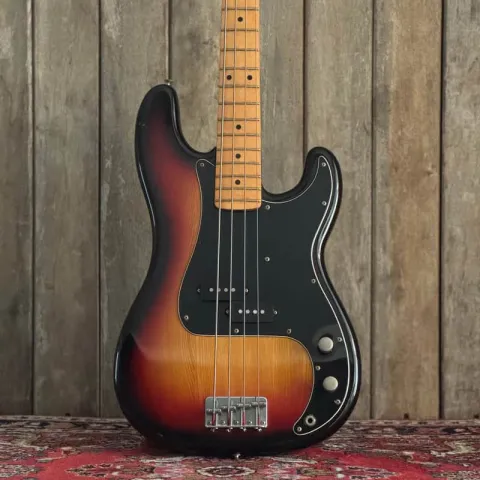
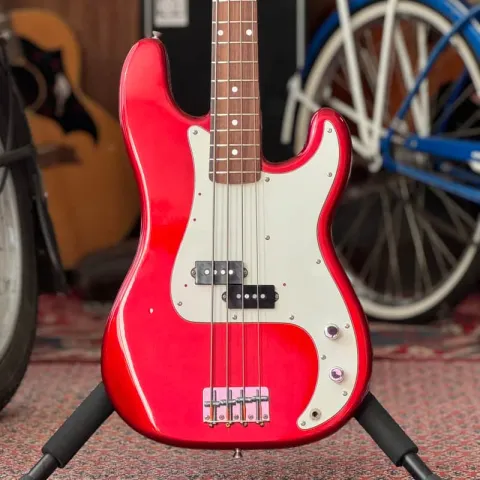
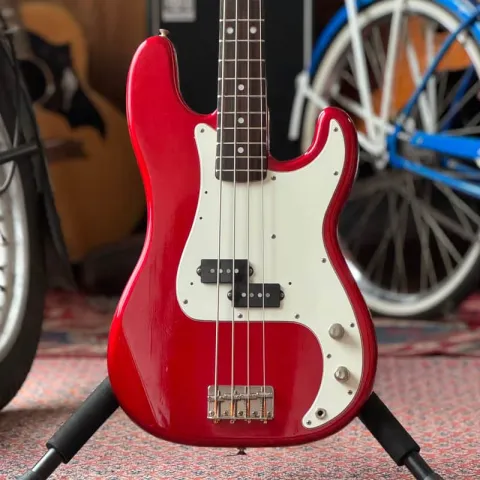
A bass with a seven-digit 00 or 10 serial can fit the early 1980/1981 system. Six-digit 10xxxx is a separate case: 10 alone does not establish 1981. Shorter five-digit and L numbers can be compared conditionally with early plate tables. For Hard Puncher and Jazz Sound, first check the model version and originality of the neck and plate. Six-digit 101683 still does not establish a year.
Tokai Forum — original Hard Puncher six-digit serial observations ↗
About the source: Collector research based on individual instruments; this is not an official manufacturer dating chart.
Serial number decoder — Fender ↗
Serial number decoder — Greco ↗
Further reading
Tokai Forum — collector observations: LS/LC serial progression ↗
Tokai Forum — LS160 owner report, 2010 purchase and 10-prefix serial ↗
2025 Tokai LS-101F — seller’s documented instrument, serial 2551168 ↗
East Mountain (Japan) — inspected Tokai instruments and serial photographs ↗
Tokai Forum — five-digit serials and dated potentiometer observations ↗
Japanese first-hand PB-50 inspection (1981) and original instrument photographs ↗
Tokai Forum — owner-documented early Jazz Sound serial and construction ↗
Vintage Japan Guitars — comparative Tokai serial tables (unofficial guide) ↗