
Electric / Yamaha
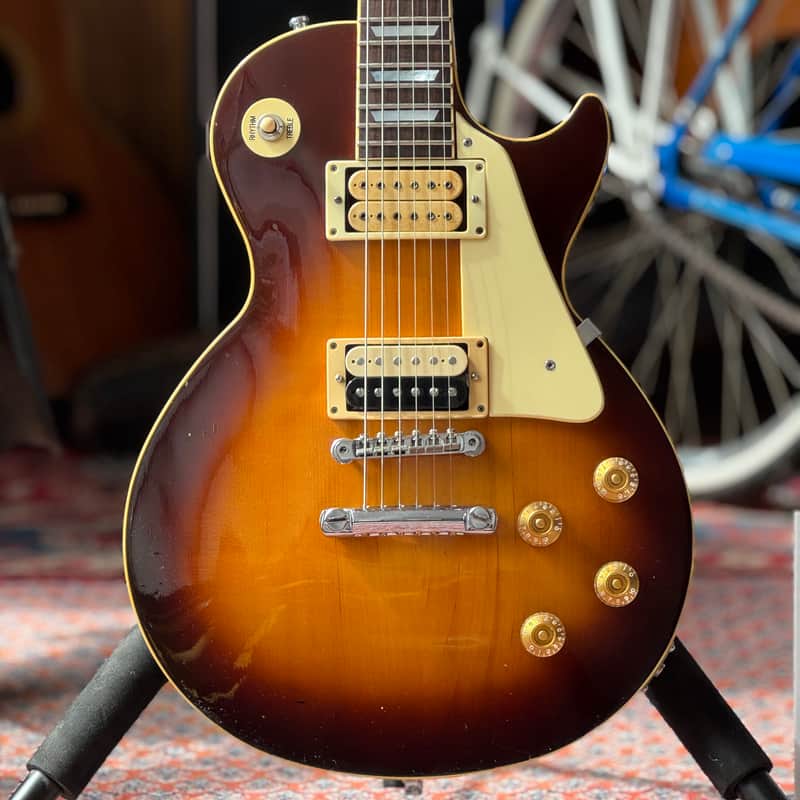
Yamaha Studio Lord SL800 - Sunburst, Lawsuit era, 1978
Listed on Reverb
1 499.00 EUR
Original Reverb prices in EUR. Check the listing for shipping and the final total.
- Model
- Studio Lord SL800
- Year
- 1978
- Finish
- Sunburst
About this instrument
Instrument description in English.
Yamaha Studio Lord SL800 is a Japanese Single Cut electric guitar, manufactured in 1978 at the Nippon Gakki factory. The instrument features a mahogany body with a maple top and a three-piece maple neck. In the presented unit, the bridge pickup has been replaced with a Seymour Duncan '59 Zebra model. After our service work, which included fret replacement, nut replacement, and electronics shielding, the guitar is fully prepared to play.
Technical specification
Manufacturer: Yamaha
Model: Studio Lord SL800
Year of production: 1978
Body: Mahogany with Maple top
Neck: Maple – 3-piece
Fingerboard: Rosewood
Frets: Medium Jumbo (Condition: 100% – new)
Pickups: 1x Yamaha Original Humbucker (Neck), 1x Seymour Duncan '59 Zebra (Bridge)
Electronics: Passive (2x Volume, 2x Tone, 3-Way Switch)
Visual condition: Visible signs of use (details in description)
Finish: Sunburst
Weight: 4.56 kg / 10.05 lbs
Body and construction The solid body is made of mahogany and equipped with a maple top. The instrument features a Sunburst lacquer finish. A traditional Set-in neck construction is used. In our workshop, the electronics cavities were shielded. The lacquer coating went through a polishing and waxing process.
Neck and ergonomics The three-piece maple neck features a "C" profile. It is paired with a rosewood fingerboard. As part of the service work, the old frets were removed and brand new Medium Jumbo size frets were installed. The nut was also replaced with a new, precisely cut element. The fingerboard was cleaned and conditioned with lemon oil.
Sound The instrument features a passive layout of two humbucker pickups.
Characteristics: The combination of the original Yamaha pickup in the neck position with the Seymour Duncan '59 model in the bridge position allows for a lower frequency response at the neck and a clear attack at the bridge.
Dynamics: The electronic circuit, controlled by independent Volume and Tone potentiometers, responds directly to articulation strength. The applied copper shielding isolates the signal from external electromagnetic interference.
Additional information
The Studio Lord series was produced by Yamaha during the so-called Lawsuit era for the Japanese Domestic Market (JDM).
The three-piece construction of the maple neck aims to increase its stiffness and resistance to deformation.
The instrument underwent an electronic circuit modification consisting of the installation of a non-factory Seymour Duncan '59 Zebra pickup in the bridge position.
The performed service work included: fret replacement, nut replacement, electronics shielding, finish polishing, hardware renewal, and adjustment of the scale length and string action.
Hardware
Bridge: Tune-O-Matic with Stopbar – a classic set allowing for intonation adjustment.
Tuners: Yamaha Die-Cast – closed, oil-sealed mechanisms. The chrome hardware retains full mechanical efficiency after cleaning.
Instrument condition
Technical condition: The instrument is 100% functionally and structurally stable, after a luthier inspection. The truss rod works properly, and the frets are completely new.
Visual condition: The front of the instrument presents very well with a clean lacquer finish. The back of the body, however, shows clear signs of wear in the form of lacquer chips and abrasions (buckle rash) resulting from natural use. The guitar has no structural wood damage.
Setup and Modifications: A Seymour Duncan '59 pickup was installed at the bridge. Fret replacement, nut replacement, electronics circuit shielding, and a full setup were performed.
Why choose this instrument
New frets and nut: The replacement of consumable elements eliminates flaws resulting from years of use, guaranteeing proper geometry.
Seymour Duncan '59: A professional pickup at the bridge is a useful modification that expands the basic characteristics of the instrument.
Circuit shielding: Securing the cavities with copper foil effectively lowers the background noise level during play.
Ready to play: After our service work, the guitar is fully prepared for regular playing without the need for additional luthier visits.
Technical specification
Manufacturer: Yamaha
Model: Studio Lord SL800
Year of production: 1978
Body: Mahogany with Maple top
Neck: Maple – 3-piece
Fingerboard: Rosewood
Frets: Medium Jumbo (Condition: 100% – new)
Pickups: 1x Yamaha Original Humbucker (Neck), 1x Seymour Duncan '59 Zebra (Bridge)
Electronics: Passive (2x Volume, 2x Tone, 3-Way Switch)
Visual condition: Visible signs of use (details in description)
Finish: Sunburst
Weight: 4.56 kg / 10.05 lbs
Body and construction The solid body is made of mahogany and equipped with a maple top. The instrument features a Sunburst lacquer finish. A traditional Set-in neck construction is used. In our workshop, the electronics cavities were shielded. The lacquer coating went through a polishing and waxing process.
Neck and ergonomics The three-piece maple neck features a "C" profile. It is paired with a rosewood fingerboard. As part of the service work, the old frets were removed and brand new Medium Jumbo size frets were installed. The nut was also replaced with a new, precisely cut element. The fingerboard was cleaned and conditioned with lemon oil.
Sound The instrument features a passive layout of two humbucker pickups.
Characteristics: The combination of the original Yamaha pickup in the neck position with the Seymour Duncan '59 model in the bridge position allows for a lower frequency response at the neck and a clear attack at the bridge.
Dynamics: The electronic circuit, controlled by independent Volume and Tone potentiometers, responds directly to articulation strength. The applied copper shielding isolates the signal from external electromagnetic interference.
Additional information
The Studio Lord series was produced by Yamaha during the so-called Lawsuit era for the Japanese Domestic Market (JDM).
The three-piece construction of the maple neck aims to increase its stiffness and resistance to deformation.
The instrument underwent an electronic circuit modification consisting of the installation of a non-factory Seymour Duncan '59 Zebra pickup in the bridge position.
The performed service work included: fret replacement, nut replacement, electronics shielding, finish polishing, hardware renewal, and adjustment of the scale length and string action.
Hardware
Bridge: Tune-O-Matic with Stopbar – a classic set allowing for intonation adjustment.
Tuners: Yamaha Die-Cast – closed, oil-sealed mechanisms. The chrome hardware retains full mechanical efficiency after cleaning.
Instrument condition
Technical condition: The instrument is 100% functionally and structurally stable, after a luthier inspection. The truss rod works properly, and the frets are completely new.
Visual condition: The front of the instrument presents very well with a clean lacquer finish. The back of the body, however, shows clear signs of wear in the form of lacquer chips and abrasions (buckle rash) resulting from natural use. The guitar has no structural wood damage.
Setup and Modifications: A Seymour Duncan '59 pickup was installed at the bridge. Fret replacement, nut replacement, electronics circuit shielding, and a full setup were performed.
Why choose this instrument
New frets and nut: The replacement of consumable elements eliminates flaws resulting from years of use, guaranteeing proper geometry.
Seymour Duncan '59: A professional pickup at the bridge is a useful modification that expands the basic characteristics of the instrument.
Circuit shielding: Securing the cavities with copper foil effectively lowers the background noise level during play.
Ready to play: After our service work, the guitar is fully prepared for regular playing without the need for additional luthier visits.