
Bass / Yamaha
Yamaha Pulser Bass 400 - Natural, Lawsuit era, 1978
Listed on Reverb
925.00 EUR
Original Reverb prices in EUR. Check the listing for shipping and the final total.
- Model
- PB400
- Year
- 1978
- Finish
- Natural
About this instrument
Instrument description in English.
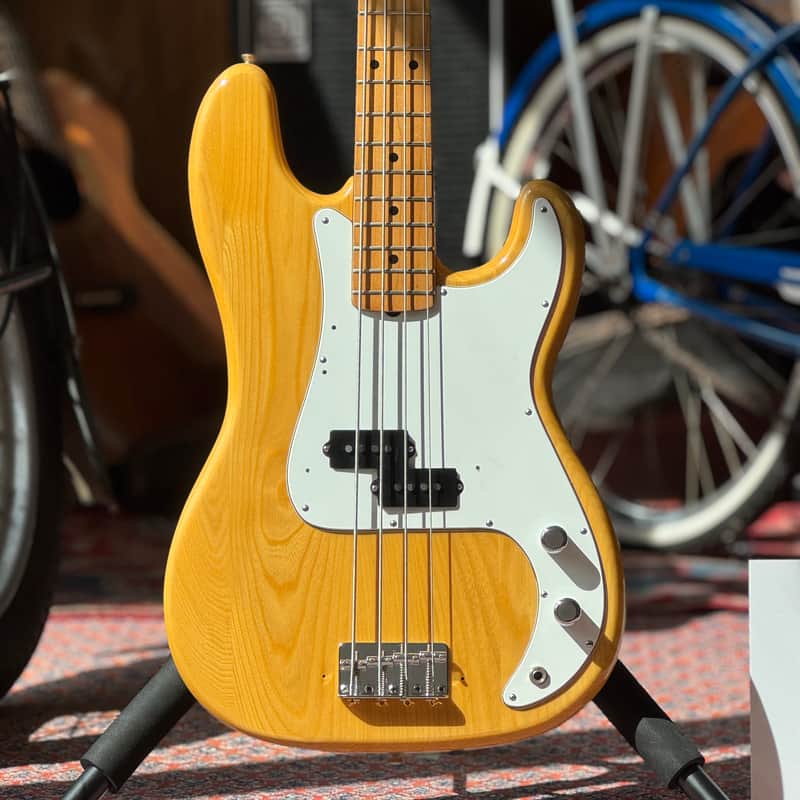
Yamaha Pulser Bass 400 is a Japanese instrument manufactured in 1978 at the Nippon Gakki factory, serving as a replica of the classic PB. The Natural finish combined with a maple neck and fingerboard exposes the texture of the applied ash wood. The instrument features traditional, passive electronic solutions. It is equipped with a white pickguard and chrome hardware. The bass underwent a full luthier service in our workshop, including fret dressing, coating maintenance, and electronics circuit shielding.
Technical specification
Manufacturer: Yamaha
Model: Pulser Bass 400
Year of production: 1978
Body: Japanese Ash (Sen)
Neck: Maple
Fingerboard: Maple
Frets: Medium (Condition: 100% – after dressing)
Pickups: 1x Yamaha Split-Coil
Electronics: Passive (1x Volume, 1x Tone)
Visual condition: Very good (see the description below)
Finish: Natural
Body and construction The solid body is made of Japanese ash (Sen). The applied Natural finish leaves the natural wood grain visible. The body is joined to the neck using a standard Bolt-on construction, and the joint is secured by a metal plate engraved with "Made in Japan". A white pickguard is mounted on the front. In our workshop, the lacquer coating on the body was polished and protected with wax.
Neck and ergonomics The maple neck features a "C" profile. A two-piece construction is used here (a maple neck with a glued-on maple fingerboard, colloquially known as a "maple cap"), which means the back of the neck is completely smooth and devoid of a truss rod stripe (skunk stripe). The fingerboard was polished and protected with wax. The Medium size frets underwent dressing (leveling, crowning, and polishing), allowing for an even string setup across the entire neck.
Sound The instrument is equipped with a single Split-Coil pickup in a passive circuit.
Characteristics: An even frequency response with a tight bottom end and exposed mid-range typical of this type of pickup and the applied ash wood.
Dynamics: The passive circuit responds directly to finger articulation and pick playing. Metal knobs are used to control volume and tone. Thanks to the cavity shielding we performed, the circuit is isolated from electromagnetic interference.
Additional information
The Pulser series was part of Yamaha's offer during a period coinciding with the growing production of traditional replicas by other Japanese manufacturers of that time (the so-called Lawsuit era).
The use of Japanese ash (Sen) is a characteristic solution for 1970s Japanese lutherie.
The instrument underwent a comprehensive technical inspection. The scope of work included: fret dressing, electronics shielding, body and fingerboard polishing with waxing, metal hardware cleaning, and intonation setup.
Small mounting holes are visible on the body, indicating that in the past, the instrument was equipped with metal pickup and bridge covers (so-called ashtrays).
Hardware
Bridge: Vintage Style – a steel construction with four adjustable saddles ensuring proper intonation.
Tuners: Open Gear – classic, open-back mechanisms. The serial number of the instrument is stamped on the back of the headstock. The chrome hardware, after cleaning, is fully functional mechanically and bears signs of a natural patina.
Musical application
Musical styles: Rock, Blues, Funk, Punk, Soul.
Environment: Rehearsals, live performances, and recording studio sessions where shielded electronics are beneficial.
For whom: For bassists who prefer a PB neck profile, a smooth back of the neck without a walnut stripe, and the aesthetic of natural wood.
Instrument condition
Technical condition: The instrument is fully functional mechanically and electronically, after a full luthier inspection. The truss rod functions correctly.
Visual condition: The instrument shows signs of use. Minor scratches and dings are visible on the lower and rear parts of the body. There is a superficial scratch on the neck that does not create resistance when moving the hand. Holes from removed metal covers and a tugbar are visible.
Setup and Modifications: Electronics circuit shielding, full fret dressing, lacquer and hardware conditioning, neck relief adjustment, and intonation setup.
Why choose this instrument
Maple Cap Construction: The absence of a masking stripe (skunk stripe) on the back of the neck provides a uniform, smooth wood surface for the thumb.
Maple fingerboard: Lacquered maple wood offers a slightly brighter tone and faster sound response compared to unlacquered rosewood fingerboards.
Natural finish: The transparent lacquer highlights the grain of the Sen wood, making each unit in this finish unique in its grain pattern.
Ready to play: After performing service work, including fret dressing and shielding, the instrument is ready to play without additional luthier visits.
Technical specification
Manufacturer: Yamaha
Model: Pulser Bass 400
Year of production: 1978
Body: Japanese Ash (Sen)
Neck: Maple
Fingerboard: Maple
Frets: Medium (Condition: 100% – after dressing)
Pickups: 1x Yamaha Split-Coil
Electronics: Passive (1x Volume, 1x Tone)
Visual condition: Very good (see the description below)
Finish: Natural
Body and construction The solid body is made of Japanese ash (Sen). The applied Natural finish leaves the natural wood grain visible. The body is joined to the neck using a standard Bolt-on construction, and the joint is secured by a metal plate engraved with "Made in Japan". A white pickguard is mounted on the front. In our workshop, the lacquer coating on the body was polished and protected with wax.
Neck and ergonomics The maple neck features a "C" profile. A two-piece construction is used here (a maple neck with a glued-on maple fingerboard, colloquially known as a "maple cap"), which means the back of the neck is completely smooth and devoid of a truss rod stripe (skunk stripe). The fingerboard was polished and protected with wax. The Medium size frets underwent dressing (leveling, crowning, and polishing), allowing for an even string setup across the entire neck.
Sound The instrument is equipped with a single Split-Coil pickup in a passive circuit.
Characteristics: An even frequency response with a tight bottom end and exposed mid-range typical of this type of pickup and the applied ash wood.
Dynamics: The passive circuit responds directly to finger articulation and pick playing. Metal knobs are used to control volume and tone. Thanks to the cavity shielding we performed, the circuit is isolated from electromagnetic interference.
Additional information
The Pulser series was part of Yamaha's offer during a period coinciding with the growing production of traditional replicas by other Japanese manufacturers of that time (the so-called Lawsuit era).
The use of Japanese ash (Sen) is a characteristic solution for 1970s Japanese lutherie.
The instrument underwent a comprehensive technical inspection. The scope of work included: fret dressing, electronics shielding, body and fingerboard polishing with waxing, metal hardware cleaning, and intonation setup.
Small mounting holes are visible on the body, indicating that in the past, the instrument was equipped with metal pickup and bridge covers (so-called ashtrays).
Hardware
Bridge: Vintage Style – a steel construction with four adjustable saddles ensuring proper intonation.
Tuners: Open Gear – classic, open-back mechanisms. The serial number of the instrument is stamped on the back of the headstock. The chrome hardware, after cleaning, is fully functional mechanically and bears signs of a natural patina.
Musical application
Musical styles: Rock, Blues, Funk, Punk, Soul.
Environment: Rehearsals, live performances, and recording studio sessions where shielded electronics are beneficial.
For whom: For bassists who prefer a PB neck profile, a smooth back of the neck without a walnut stripe, and the aesthetic of natural wood.
Instrument condition
Technical condition: The instrument is fully functional mechanically and electronically, after a full luthier inspection. The truss rod functions correctly.
Visual condition: The instrument shows signs of use. Minor scratches and dings are visible on the lower and rear parts of the body. There is a superficial scratch on the neck that does not create resistance when moving the hand. Holes from removed metal covers and a tugbar are visible.
Setup and Modifications: Electronics circuit shielding, full fret dressing, lacquer and hardware conditioning, neck relief adjustment, and intonation setup.
Why choose this instrument
Maple Cap Construction: The absence of a masking stripe (skunk stripe) on the back of the neck provides a uniform, smooth wood surface for the thumb.
Maple fingerboard: Lacquered maple wood offers a slightly brighter tone and faster sound response compared to unlacquered rosewood fingerboards.
Natural finish: The transparent lacquer highlights the grain of the Sen wood, making each unit in this finish unique in its grain pattern.
Ready to play: After performing service work, including fret dressing and shielding, the instrument is ready to play without additional luthier visits.