
Guide / GUITAR LAB
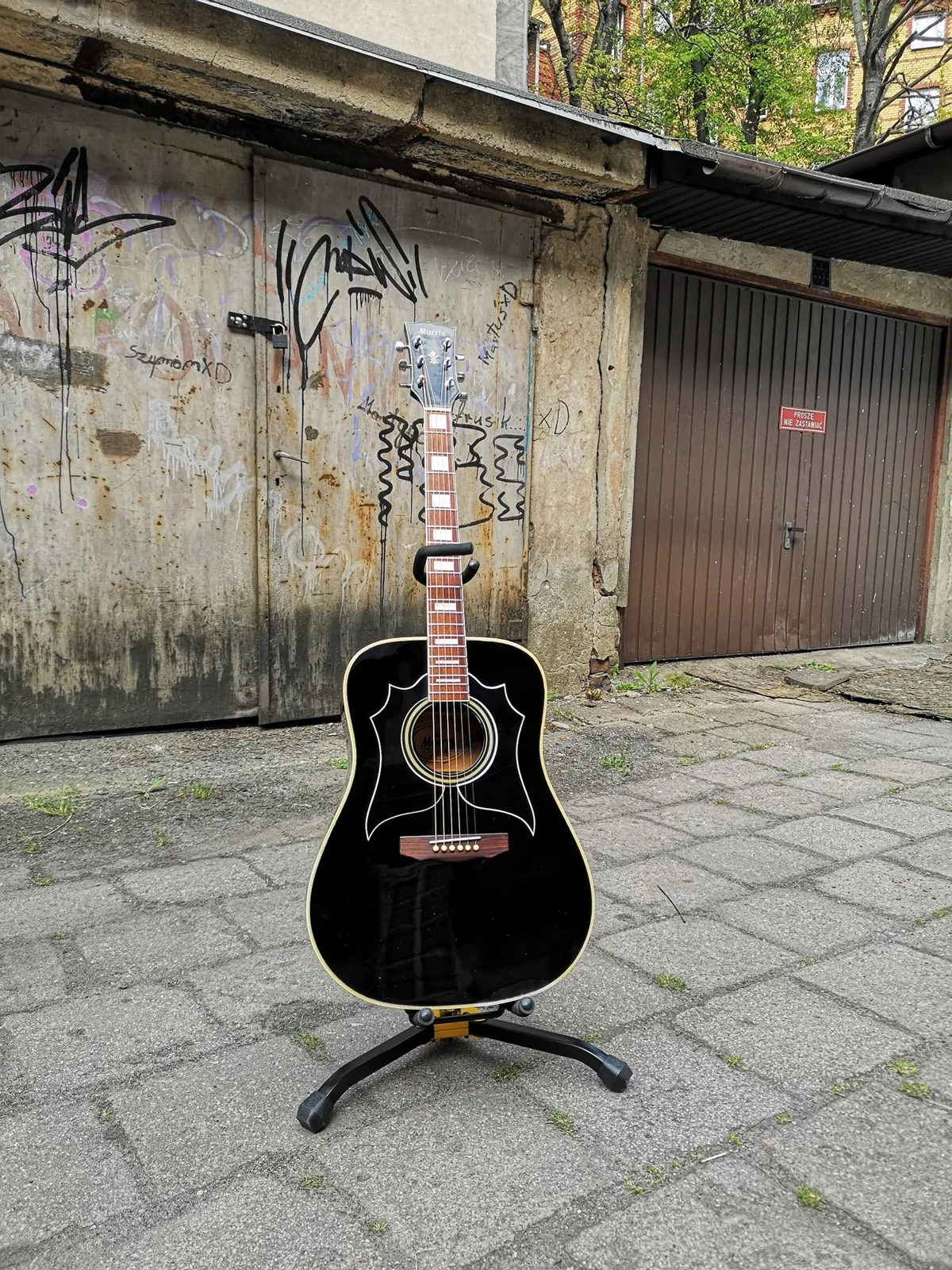
Restoring an acoustic guitar: from diagnosis to setup. Morris WL-35
When does an acoustic need more than a setup? Our Morris WL-35 project shows how to organise the work around the instrument’s actual condition.
Define the repairs before choosing parts
With an older acoustic, separate structural condition, playability and appearance. A loose bridge calls for different work from worn frets; a finish chip is not the same as a crack in the wood. One list of symptoms can therefore lead to several independent repairs.
We begin by discussing what gets in the player’s way: difficult playing, uneven notes, a visible gap or evidence of previous repairs. We then establish what needs repairing, what can stay and the desired cosmetic result. This avoids replacing parts simply because they are old.
Bridge gluing needs preparation
The condition of the joint between bridge and soundboard matters. Before gluing, the fit needs assessing and a clamping method needs preparing. More clamp pressure cannot compensate for a poor fit. The condition of the wood and any earlier repairs also affect the approach.
Fingerboard, frets and nut do different jobs
Fingerboard levelling works on the wood beneath the frets. Fret levelling works on their metal crowns. These are different operations: removing the frets gives access to the fingerboard, but does not automatically mean that it needs levelling.
A quote should distinguish structural repairs, fret work and the final setup. That makes each stage understandable and explains why a fresh set of strings cannot solve every problem.
The Morris WL-35 at GuitarLab
On this Morris we reglued the bridge, levelled the fingerboard and replaced the frets. Repairs also covered the fingerboard joint near the nut, the binding, two areas of the body and cracks around the neck pocket.
We removed an additional pickguard and adhesive residue around the original guard. Finish touch-ups, polishing and a new bone nut completed the work. Some operations addressed structure, others the playing surface and others the finish: a good reason to plan an acoustic restoration as a whole.
Before bringing your guitar to the workshop
Describe the symptoms and any known previous repairs. Tell us whether you want to preserve signs of use or improve the appearance. The scope should follow the condition of that particular instrument and your expectations, rather than an assumption that every vintage guitar needs a full restoration.
Further reading
For more about bridge preparation and the difference between fret work and fingerboard correction, see the StewMac resources below.