
Guide / GUITAR LAB
A neck that will not adjust: truss-rod nut and fret work on a Gherson bass
An adjustment problem does not always mean replacing the entire truss rod. Here is what needs checking before work on the fingerboard and frets.
Check the adjustment mechanism first
We start by identifying the truss-rod design and checking the part engaged by the adjustment tool. A damaged nut and a damaged rod are different faults. Distinguishing them changes the scope of the repair.
Some designs allow the nut alone to be replaced. Do not assume that every mechanism can be unscrewed in the same way. Resistance during adjustment is a reason to investigate, not to use a longer lever.
What to tell the workshop
Useful details include whether the tool slips, whether the nut resists turning and whether previous adjustments changed the neck curvature. Mention recent changes of strings or tuning. Saying only that the neck is bent does not explain what the mechanism is doing.
These details help us prepare an inspection, but cannot determine remotely that the rod needs replacing. Disassembly should follow the diagnosed fault.
How neck relief is checked
Relief is the slight curvature of the neck assessed along the strings. A string can serve as a reference: fret it at the first fret and at a further fret specified for that instrument, then use a feeler gauge to check the gap above the fret crown around the middle of that span. The measurement is from string to metal, not to wood.
Interpret the result according to the instrument’s construction and relevant recommendations. Relief and action are different measurements. Considering both helps distinguish adjustment problems from fret issues or string-height settings.
Adjustment, fingerboard work and fret levelling
Fingerboard curvature and uneven frets are assessed separately. The truss rod, corrections to the wood and levelling the fret crowns are not three interchangeable ways to do the same job. Before choosing levelling or replacement, identify the area that needs attention.
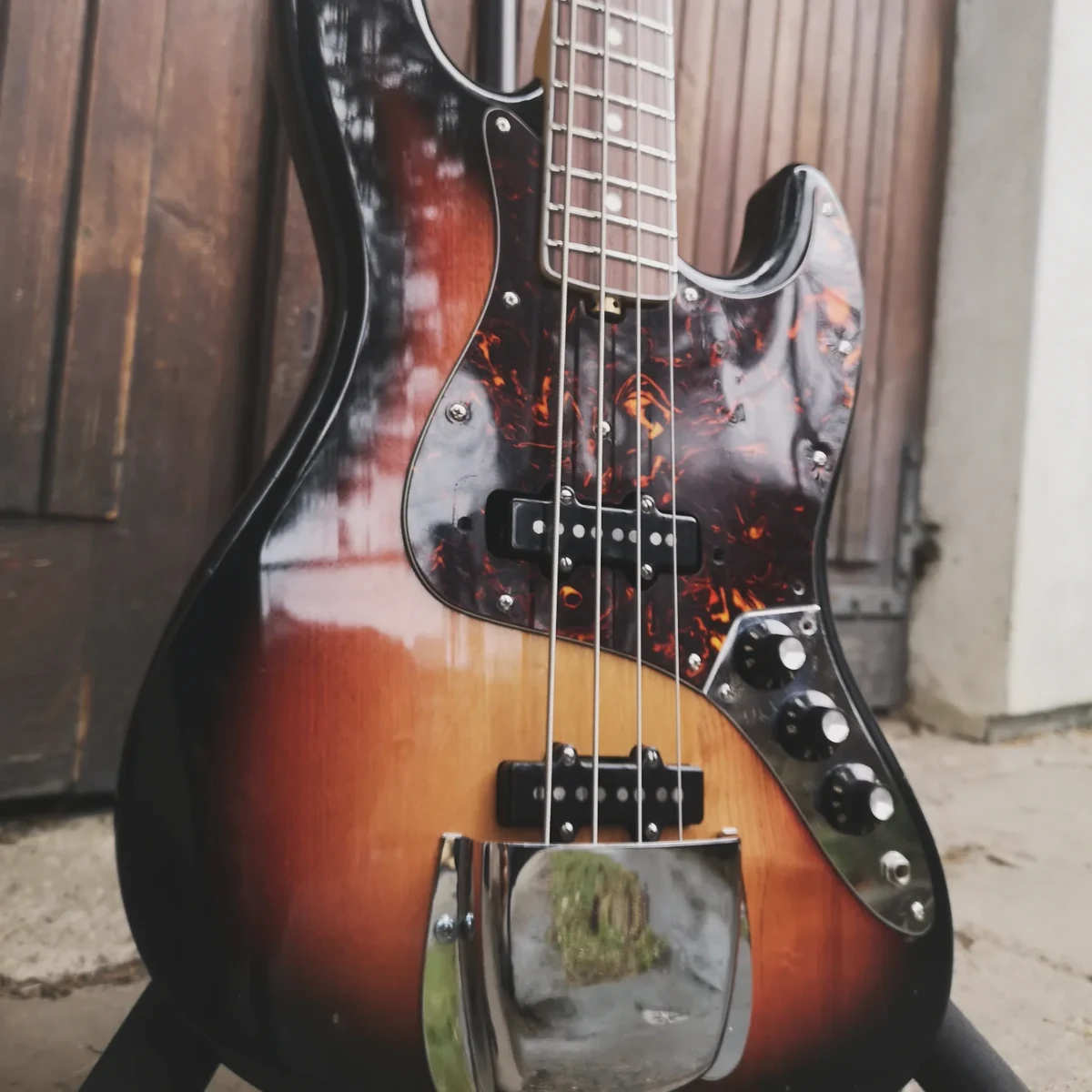
Gherson Jazz Bass: repair before new frets
On this bass we first worked on the truss-rod nut. We then corrected the fingerboard and installed new frets. The fret work formed part of a broader preparation of the neck.
The order of decisions matters: diagnose the adjustment problem first, then establish the work needed on the playing surface. A refret should not be the answer to every difficulty setting up an instrument.
Discuss the setup you want
Specify the tuning and strings you intend to use and describe your playing technique. Rather than ordering a repair based on a guess, explain the symptoms and the result you want. This keeps the quote focused on the needs of the bass and its player.
Further reading
Read more about adjustment mechanisms and fret work in the StewMac resources. The replaceable-nut repair illustrates one possible case, not a solution for every truss-rod design. Fender’s guide explains relief measurement.
Truss-rod nut repair — StewMac ↗