
Bässe / Greco
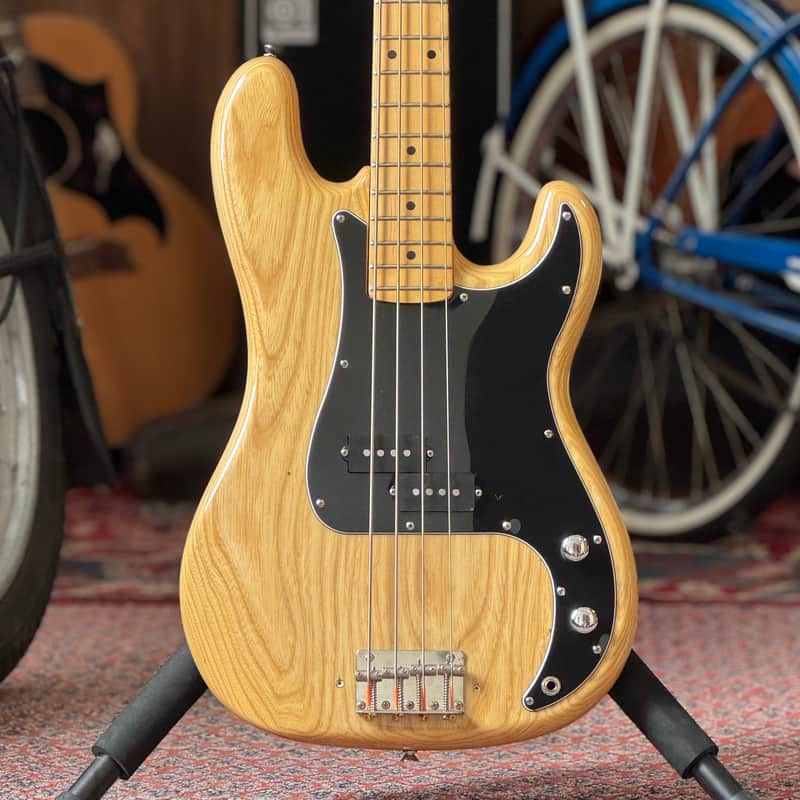
Greco Mercury Bass PB500 - Natural, Lawsuit era, 1979
Auf Reverb angeboten
869,00 EUR
Originalpreise von Reverb in EUR. Versandkosten und Endbetrag findest du im Angebot.
- Modell
- Mercury Bass PB-500
- Baujahr
- 1979
- Finish
- Natural
Über dieses Instrument
Diese Instrumentenbeschreibung ist derzeit auf Englisch verfügbar.
Greco Mercury Bass PB500 is a Japanese replica of a PB-style bass, manufactured in 1979 at the FujiGen Gakki factory. The Mercury Bass series from the late 70s featured, among other things, a large black logo on the headstock, mirroring the aesthetic trends of that period. The Natural finish version (often designated in catalogs as PB-500N) was built using Japanese ash (Sen), selected for its prominent grain pattern. This particular unit features a non-factory eye symbol engraved on the headstock, which is a modification made by a previous owner. After our service work, which included fret dressing and copper foil shielding of the electronics, the bass is ready to play.
Technical specification
Manufacturer: Greco
Model: Mercury Bass PB500
Year of production: 1979
Body: Japanese Ash (Sen)
Neck: Maple
Fingerboard: Maple
Frets: Medium (Condition: 90% – after dressing)
Pickups: 1x Greco PB-Vintage Split-Coil
Electronics: Passive (1x Volume, 1x Tone)
Visual condition: Visible signs of use (details in description)
Finish: Natural
Weight: 4.22 kg / 9.30 lbs
Body and construction The solid body is made of Japanese ash (Sen). The instrument features a clear lacquer finish that fully exposes the natural wood structure. A traditional Bolt-on construction is used, and the neck-to-body joint was made at the FujiGen Gakki factory with a tightly fitted pocket. In our workshop, the electronics cavities were completely shielded with copper foil. The lacquer coating went through a polishing and waxing process.
Neck and ergonomics The maple neck features a "C" profile. It is paired with an integrated maple fingerboard (one-piece construction). The Medium size frets retain about 90% of their original height and underwent a dressing process (leveling and polishing) during our service work. The fingerboard surface was cleaned and conditioned.
Sound The instrument is equipped with a single Split-Coil pickup in a passive circuit.
Characteristics: The combination of an ash body with a maple neck and a Greco pickup generates a frequency response with a pronounced upper mid-range attack and a controlled bottom end.
Dynamics: The passive electronics, controlled by Volume and Tone potentiometers, respond directly to articulation strength. The applied shielding lowers the circuit's susceptibility to external electromagnetic interference.
Additional information
The Mercury Bass series from the late 1970s was produced by the FujiGen Gakki factory as a detailed replica of American bass designs.
Japanese ash (Sen) is a wood species used by Japanese manufacturers of that period to build bodies finished in natural lacquer (often used as a substitute for swamp ash due to similar properties).
The PB bodies from Greco in this period are characterized by slightly more rounded outer edges compared to the specifications of some original instruments from those years.
The service work we performed included: fret dressing, full copper electronics shielding, finish polishing, fingerboard conditioning, hardware renewal, and scale length setup.
Hardware
Bridge: Greco Vintage PB – a steel construction with adjustable saddles ensuring proper intonation.
Tuners: Greco Open Gear – open-back mechanisms with classic buttons. The chrome hardware went through a renewal process and retains its mechanical efficiency.
Instrument condition
Technical condition: The instrument is mechanically and electronically functional after a luthier verification. The truss rod works properly, and the frets are leveled.
Visual condition: The guitar shows visible, standard signs of use appropriate for its age. Scratches are present on the body lacquer and the pickguard. There is a non-factory engraving (an eye symbol) on the headstock, executed by a previous owner. The instrument has no structural wood damage.
Setup and Modifications: Copper foil shielding of the electronics cavities, fret dressing, lacquer conditioning, and a setup of the scale length and string action were performed. According to verification, aside from the visual modification by a previous user (headstock engraving), the instrument retains its factory specification.
Why choose this instrument
Ash body: The use of Sen wood provides a different characteristic with a stronger attack, desired by those looking for 70s specifications.
Structural stability: The FujiGen Gakki factory was known for maintaining high woodworking standards, verified by the current stability of the neck joint.
Circuit shielding: Securing the cavities with copper foil effectively lowers the noise level while working with the instrument.
Ready to play: After our service work, the bass is fully prepared for regular playing without the need for additional luthier visits after purchase.
Technical specification
Manufacturer: Greco
Model: Mercury Bass PB500
Year of production: 1979
Body: Japanese Ash (Sen)
Neck: Maple
Fingerboard: Maple
Frets: Medium (Condition: 90% – after dressing)
Pickups: 1x Greco PB-Vintage Split-Coil
Electronics: Passive (1x Volume, 1x Tone)
Visual condition: Visible signs of use (details in description)
Finish: Natural
Weight: 4.22 kg / 9.30 lbs
Body and construction The solid body is made of Japanese ash (Sen). The instrument features a clear lacquer finish that fully exposes the natural wood structure. A traditional Bolt-on construction is used, and the neck-to-body joint was made at the FujiGen Gakki factory with a tightly fitted pocket. In our workshop, the electronics cavities were completely shielded with copper foil. The lacquer coating went through a polishing and waxing process.
Neck and ergonomics The maple neck features a "C" profile. It is paired with an integrated maple fingerboard (one-piece construction). The Medium size frets retain about 90% of their original height and underwent a dressing process (leveling and polishing) during our service work. The fingerboard surface was cleaned and conditioned.
Sound The instrument is equipped with a single Split-Coil pickup in a passive circuit.
Characteristics: The combination of an ash body with a maple neck and a Greco pickup generates a frequency response with a pronounced upper mid-range attack and a controlled bottom end.
Dynamics: The passive electronics, controlled by Volume and Tone potentiometers, respond directly to articulation strength. The applied shielding lowers the circuit's susceptibility to external electromagnetic interference.
Additional information
The Mercury Bass series from the late 1970s was produced by the FujiGen Gakki factory as a detailed replica of American bass designs.
Japanese ash (Sen) is a wood species used by Japanese manufacturers of that period to build bodies finished in natural lacquer (often used as a substitute for swamp ash due to similar properties).
The PB bodies from Greco in this period are characterized by slightly more rounded outer edges compared to the specifications of some original instruments from those years.
The service work we performed included: fret dressing, full copper electronics shielding, finish polishing, fingerboard conditioning, hardware renewal, and scale length setup.
Hardware
Bridge: Greco Vintage PB – a steel construction with adjustable saddles ensuring proper intonation.
Tuners: Greco Open Gear – open-back mechanisms with classic buttons. The chrome hardware went through a renewal process and retains its mechanical efficiency.
Instrument condition
Technical condition: The instrument is mechanically and electronically functional after a luthier verification. The truss rod works properly, and the frets are leveled.
Visual condition: The guitar shows visible, standard signs of use appropriate for its age. Scratches are present on the body lacquer and the pickguard. There is a non-factory engraving (an eye symbol) on the headstock, executed by a previous owner. The instrument has no structural wood damage.
Setup and Modifications: Copper foil shielding of the electronics cavities, fret dressing, lacquer conditioning, and a setup of the scale length and string action were performed. According to verification, aside from the visual modification by a previous user (headstock engraving), the instrument retains its factory specification.
Why choose this instrument
Ash body: The use of Sen wood provides a different characteristic with a stronger attack, desired by those looking for 70s specifications.
Structural stability: The FujiGen Gakki factory was known for maintaining high woodworking standards, verified by the current stability of the neck joint.
Circuit shielding: Securing the cavities with copper foil effectively lowers the noise level while working with the instrument.
Ready to play: After our service work, the bass is fully prepared for regular playing without the need for additional luthier visits after purchase.